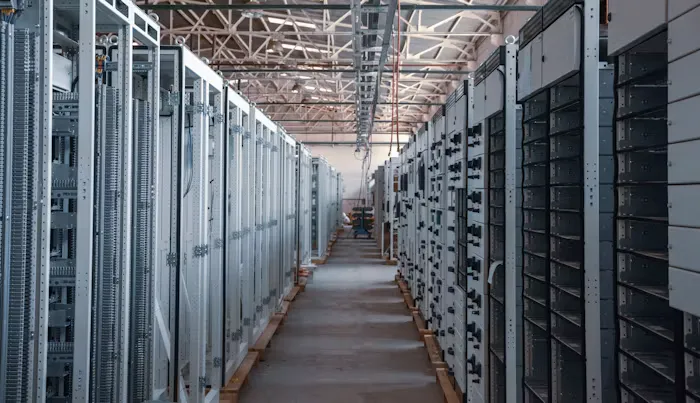
Cloud is the default and colocation is treated as something companies are migrating away from. For a subset of Indian businesses that framing is wrong, and the subset is larger than the cloud conversation suggests. A workload that runs at a steady, predictable level, twenty-four hours a day, with substantial storage and heavy data transfer, is close to the worst case for cloud pricing and close to the best case for owning hardware in somebody else's data centre.
The economics turn on utilisation. Cloud charges you for elasticity whether or not you use it, and its value is highest when demand is spiky or unknown. A machine you own costs the same at three in the morning as at peak, which is terrible for a workload that idles and excellent for one that does not. If your servers run at seventy per cent all day, every day, and have for two years, the arithmetic on colocation deserves a genuine look rather than a reflexive dismissal.
What you give up is not primarily flexibility, it is the operational surface someone else was covering. Hardware fails and someone must hold spares and swap them. Capacity has to be planned months ahead rather than provisioned in minutes. Firmware, hypervisors, storage arrays and network gear all need patching. Backups and replication are yours to design and prove. That is a real function, and the reason many colocation exits happen is not cost — it is that the one person who understood the estate left.
There are non-cost reasons that are entirely legitimate in the Indian context. A regulatory or contractual requirement for data to reside in facilities you control. A latency requirement to specific locations where cloud regions do not help. Hardware the cloud does not offer economically. An existing investment with life left in it. And occasionally a customer requirement — some Indian enterprise and government buyers still specify infrastructure arrangements in tenders.
The arrangement that suits most businesses in this position is neither pure. Steady baseline workloads on owned hardware in a colocation facility, with cloud for anything variable, anything experimental, and disaster recovery — where paying only when you need it is exactly right. That gives you the cost profile of ownership on the predictable part and elasticity where it earns its premium, and it means your disaster recovery site costs almost nothing until the day it matters.
Before deciding either way, do the arithmetic properly on your own numbers rather than on a comparison article. Three years of total cost including hardware, colocation rent, power, bandwidth, spares, and — the term everyone omits — the loaded cost of the people who will operate it. Compare against your actual current or projected cloud bill after rightsizing, not before, because a cloud estate full of idle resources makes colocation look better than it is. Teams that skip the rightsizing step reach the wrong conclusion and commit to hardware for three years on the strength of it.